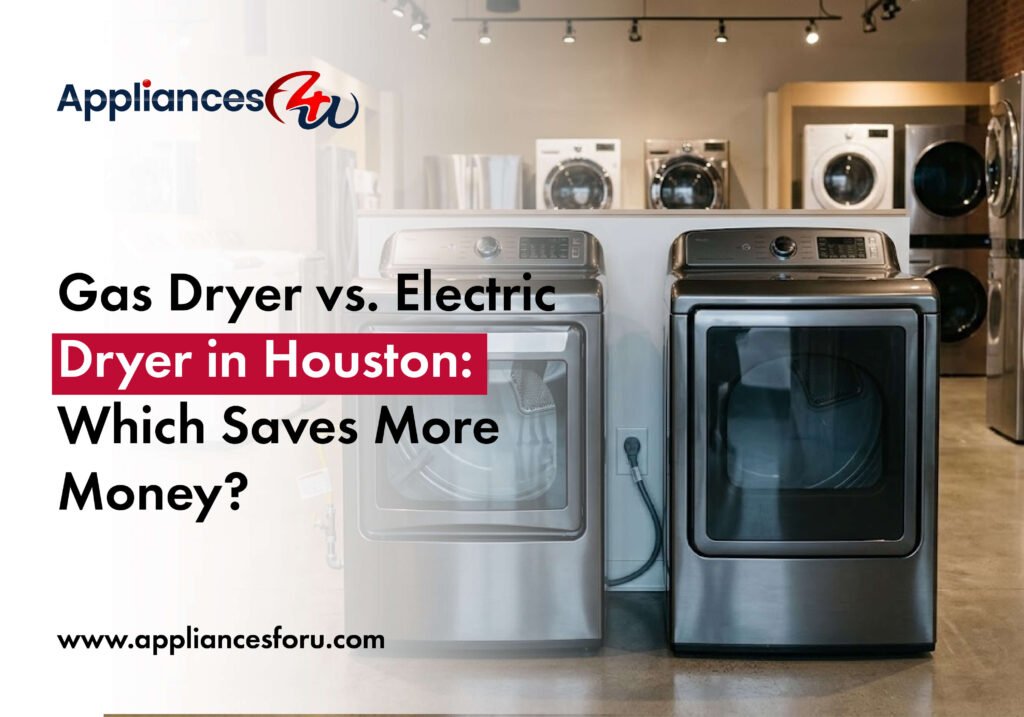
Buying a new dryer in Houston comes with a question that most shoppers do not think about until they are standing in the showroom: gas or electric?
It seems like a small detail, but the choice affects your upfront cost, your monthly utility bills, how quickly your clothes dry, and even where you can install the machine. And in a city like Houston, where energy prices, humidity, and home layouts vary widely, the “right” answer is not the same for everyone.
Here is a full breakdown of gas vs. electric dryers for Houston homeowners, including real cost estimates, so you can make the smart choice for your household.
The Quick Answer
For most Houston homes, a gas dryer saves more money over time thanks to lower operating costs and faster drying cycles. However, an electric dryer is often the smarter choice if you do not already have a gas hookup, if you do laundry only occasionally, or if you are working with a tight upfront budget.
Now let us dig into the real numbers and details.
How Each Dryer Type Works
Electric dryers use a heating element powered by a 240-volt outlet to warm the air inside the drum. A fan circulates the hot air, and moisture is vented outside.
Gas dryers use a natural gas burner to heat the air. The drum, motor, and controls still run on electricity (a standard 120-volt outlet), but the heat itself comes from gas. Moisture is vented outside the same way.
Both types dry clothes effectively. The difference is in how they generate heat and how much that heat costs.
Upfront Cost Comparison
Gas dryers typically cost $50 to $150 more than the same model in an electric version. That premium is the manufacturer’s cost for the gas burner and safety components.
At Appliances 4 U, you can see this difference in models like:
- 3 cu. ft. LG Ultra Large Capacity Electric Dryer (lower upfront price)
- 4 cu. ft. Samsung Ultra Large Capacity Smart Front Load Gas Energy Star Dryer (higher upfront price)
- 5 cu. ft. Samsung Smart Gas Dryer with Steam Sanitize+ (higher upfront price)
That extra $50 to $150 usually pays for itself within one to two years of regular use through lower operating costs.
Installation Costs (This Is a Big One)
This is where the math often flips in favor of electric dryers for many Houston homes.
If you already have a gas hookup: Gas dryer installation is simple. A plumber or appliance installer connects the gas line, tests for leaks, and you are ready to go. Installation runs about $50 to $150.
If you do NOT have a gas hookup: Adding a gas line to your laundry area typically costs $300 to $1,500 or more in Houston, depending on how far your laundry room is from the main gas line. This can wipe out any long-term savings.
Electric dryer installation: As long as you have a 240-volt outlet (most Houston homes built after the 1970s do), installation is plug-and-play. If you need a new outlet installed by an electrician, expect to pay $200 to $600.
The rule of thumb: If your home already has a gas hookup in the laundry area, gas is worth considering. If it does not, electric is almost always the better choice.
Operating Cost Comparison
Here is where gas dryers shine. Natural gas is generally cheaper per unit of energy than electricity, especially in Texas.
Average cost per load in Houston:
- Electric dryer: $0.30 to $0.45 per load
- Gas dryer: $0.15 to $0.25 per load
That may not sound like much, but let us do the math for a typical Houston family:
Family of 4 running 8 loads per week:
- Electric: $0.40 × 8 loads × 52 weeks = $166 per year
- Gas: $0.20 × 8 loads × 52 weeks = $83 per year
- Savings with gas: $83 per year
Family of 5+ running 12 loads per week:
- Electric: $0.40 × 12 loads × 52 weeks = $250 per year
- Gas: $0.20 × 12 loads × 52 weeks = $125 per year
- Savings with gas: $125 per year
Over the 12-15 year lifespan of a modern dryer, gas can save a busy family $1,000 to $1,800 in utility costs.
Drying Speed
Gas dryers heat up faster and reach higher temperatures than electric dryers. In practice, this means:
- Gas dryers finish an average load in 35 to 50 minutes
- Electric dryers finish an average load in 45 to 65 minutes
For a family doing multiple loads on the same day, this can save 30+ minutes on laundry day. It also means less strain on your HVAC system, since the dryer is heating (and venting) for less time.
Impact on Your Clothes
Both gas and electric dryers can be gentle on clothes when used properly. However, there are subtle differences:
- Gas dryers produce a slightly moister heat, which reduces static and can leave clothes feeling softer.
- Electric dryers produce a drier heat, which can cause more static and slightly more wear over time.
Neither difference is dramatic, but if you notice a lot of static in your laundry with an electric dryer, gas may be a small quality of life upgrade.
Houston-Specific Factors to Consider
1. Humidity Impact
Houston’s high humidity means your dryer has to work harder to remove moisture from clothes. Gas dryers, with their higher heat output, handle humid loads more efficiently. This matters more during our long, muggy summers.
2. Energy Costs in Texas
Texas has one of the more deregulated energy markets in the country, and electricity rates vary widely by provider and plan. Natural gas prices tend to be more stable. If you are on a variable rate electric plan, gas dryer savings can be even more significant during summer peak pricing.
3. Hurricane Season and Power Outages
During hurricane season, power outages are a real concern. Gas dryers still need electricity to run the drum motor and controls, so they will not work during an outage either. Neither option is a winner here, but it is worth knowing.
4. Home Age Matters
Older Houston homes (built before the 1980s) are more likely to have existing gas hookups since gas was the standard for many appliances. Newer homes and apartments often skip gas hookups in the laundry area entirely to save on construction costs. Check your setup before deciding.
5. Home Resale Value
In the Houston market, gas hookups in the laundry room can be a small selling point for future buyers. If you are planning to sell within a few years, this can be a minor plus for gas.
Safety Considerations
Both dryer types are safe when properly installed and maintained, but there are some differences:
Gas dryers require:
- Proper venting to the outside (essential to prevent carbon monoxide buildup)
- Annual professional inspection of the gas line
- A carbon monoxide detector in or near the laundry room
Electric dryers require:
- Proper venting to prevent lint fires (the leading cause of dryer fires)
- Correct 240-volt wiring and grounding
Regardless of which you choose, regular dryer vent cleaning is essential, especially in Houston where humidity can make lint stick and build up faster.
Maintenance Differences
Both types have similar maintenance needs:
- Clean the lint filter after every load
- Clean the dryer vent duct every 6 to 12 months
- Check and clean the exhaust hood outside your home
Gas dryers have the added recommendation of a yearly gas line inspection. It is a small cost (usually $75 to $150) but important for safety.
Who Should Buy Gas?
You should choose a gas dryer if you:
- Already have a gas hookup in your laundry area
- Do laundry 6+ loads per week
- Want faster cycle times
- Plan to keep the dryer for 10+ years
- Are okay with slightly higher upfront cost for long-term savings
- Live in an older Houston home with gas already installed
Who Should Buy Electric?
You should choose an electric dryer if you:
- Do not have a gas hookup (and do not want to pay to add one)
- Rent your home or apartment
- Do laundry 3 or fewer loads per week
- Are on a tight upfront budget
- Live in a newer construction home built without gas
- Want the simplest possible installation
What About Heat Pump Dryers?
Heat pump dryers are a newer, ultra-efficient electric option. They use less energy than traditional electric dryers (sometimes 50% less), but they cost significantly more upfront and dry more slowly. They also do not require a vent, which can be a big plus in tight spaces.
For most Houston shoppers, standard electric or gas dryers still offer the best balance of price, speed, and efficiency. But if energy efficiency is your top priority and you can afford the upfront cost, heat pump models are worth considering.
The Bottom Line
For Houston homeowners with an existing gas hookup and a busy laundry routine, gas dryers offer real, measurable savings over their lifetime. The higher upfront cost pays for itself quickly through cheaper operation and faster cycles.
For Houston shoppers without a gas hookup, or with lighter laundry needs, electric dryers are the smarter, simpler choice. The installation savings alone often outweigh any long-term operating cost difference.
The most important step is to check your laundry room before you shop. Look for:
- A 240-volt outlet (needed for electric)
- A gas shutoff valve (needed for gas)
- A vent duct going outside (needed for both)
Once you know what your home is set up for, the decision gets much easier.
Ready to Find the Right Dryer for Your Houston Home?
Appliances 4 U carries a full range of gas and electric dryers from LG, Samsung, Whirlpool, Maytag, GE, and more at both our Southwest Freeway and Westoaks (Highway 6) locations. Our team can help you check your hookup situation, compare models, and find financing that works for your budget.
Visit our showrooms, give us a call, or browse our laundry collection online to see current inventory and pricing.