
A Samsung French door refrigerator or a Whirlpool washer and dryer set can cost more than many shoppers expect, and most people don’t have that cash ready when an old unit fails. That’s why Best Buy appliance financing is one of the most searched ways to pay for a new kitchen or laundry upgrade. Store cards, promotional loans, and buy now, pay later plans all promise the same thing: the appliance today, with the bill spread out over time. The terms vary widely, though, and the offer with the lowest monthly payment isn’t always the cheapest overall.
This guide compares the main options side by side, so you can settle on a payment plan before you reach the checkout. We’ll look at Best Buy’s own financing, what retailers offer, and other ways to pay, from credit cards to personal loans. The advice applies whether you’re buying a refrigerator, a chest freezer, a dishwasher, or a set of laundry machines.
How Best Buy Financing Works
Best Buy’s financing centers on its store credit card. Promotional offers typically let you avoid interest if you pay the full balance within a set period, such as 6, 12, 18, or 24 months, on qualifying purchases. Approval depends on your credit, and each offer has its own terms, so read them before you sign.
The detail many shoppers miss is deferred interest. If any balance remains when the promotional window closes, interest can be charged back to the purchase date. A $1,500 chest freezer on a 12-month plan that is $60 short at the end can cost far more than the sticker price suggested. Set up autopay for the full balance divided by the number of months, plus a small cushion.
What Retailers Offer
Major home improvement and appliance retailers usually run their own store cards with similar promotions, and many give you an answer at checkout. The convenience is real, and store deals on delivery or installation can add value. The trade-off is that the card works mainly at one store, and the standard rate after the promotion is often high. Check the regular APR in the terms, not only the headline offer, and confirm that the promotion covers the exact model you want, since some brands or accessories may be excluded.
Other Ways to Pay
Buy now, pay later plans from providers such as Affirm, Klarna, and Afterpay split a purchase into short installments, sometimes with no interest. They are simple to use, but a missed payment can trigger a late fee, and longer plans may carry interest. They suit smaller purchases better than a $2,000 refrigerator.
A 0% introductory APR credit card works like a store card without tying you to one retailer. Pay the balance before the intro period ends, because the regular rate applies to anything left over.
A personal loan gives you a fixed rate and a fixed payoff date, which makes monthly costs predictable. Credit unions often offer competitive rates, so compare the APR, which includes fees, rather than the monthly payment alone.
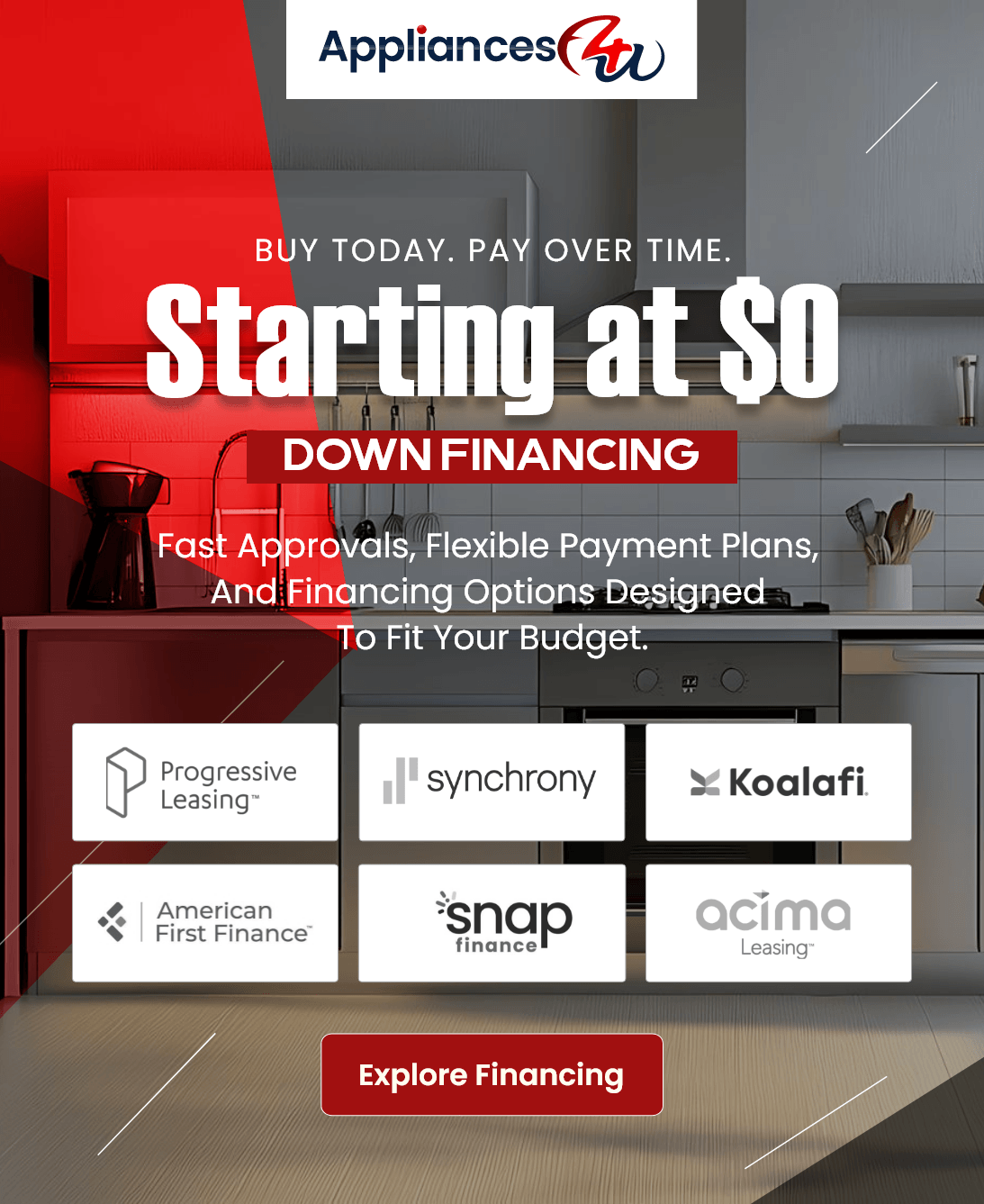
For a local option, compare the financing options at Appliances4U, which cover new, open box, and scratch and dent appliances.
Save Money Before You Borrow
Scratch and dent appliances usually have cosmetic damage, such as a dented panel or scuffed finish, while the mechanics work like new. Because the cash price is lower, you may borrow less or skip financing altogether. Inspect the unit in person, check the warranty, and confirm the damage won’t affect the parts you use most. You can browse scratch-and-dent appliances before you decide.
Your appliance type also shapes the payment. A chest or deep freezer costs less than a full-size refrigerator, and smaller items like wine coolers and ice makers often fit a short payoff plan. Kitchen appliances such as dishwashers and wall ovens follow the same logic: price out the whole kitchen before you pick a plan.
Laundry machines deserve the same math. A top-load washer bought outright may cost less over time than a pair financed at a high standard rate. Compare appliance brands for warranty length and parts availability too, since a cheaper model with weak support can cost more in the long run.
Which Option Fits Your Budget
If you can clear the balance within 12 months, a store card or 0% APR card is usually the cheapest path. If you need more time, a fixed-rate personal loan offers a clearer payoff schedule. For small purchases, buy now, pay later works well as long as you pay each installment on time. Whichever route you choose, compare the total cost, not just the monthly payment, and borrow only what you can repay on schedule.
Frequently Asked Questions
Does Best Buy appliance financing charge interest?
It can be interest-free if you pay the full balance within the promotional period. If a balance remains, deferred interest may be charged back to the purchase date, so confirm the terms before you buy.
Is buy now, pay later cheaper than a store card?
It depends. Short plans with no interest can cost nothing, but late fees and interest on longer plans can add up. For larger purchases, a store card with a promotion can be cheaper if you pay in full on time.
Can I finance an appliance with bad credit?
Store cards usually require credit approval. Some retailer and buy now, pay later programs have looser rules, but “no credit check” offers can carry high fees, so read the total cost first.
Does financing affect my credit score?
Applications often trigger a hard credit inquiry, and a new account can lower your average account age. On-time payments generally help your score over time.
Is a scratch-and-dent appliance cheaper than financing a new one?
Often, yes. The lower cash price means less to borrow, and the appliance usually performs like a new unit when the damage is cosmetic.